
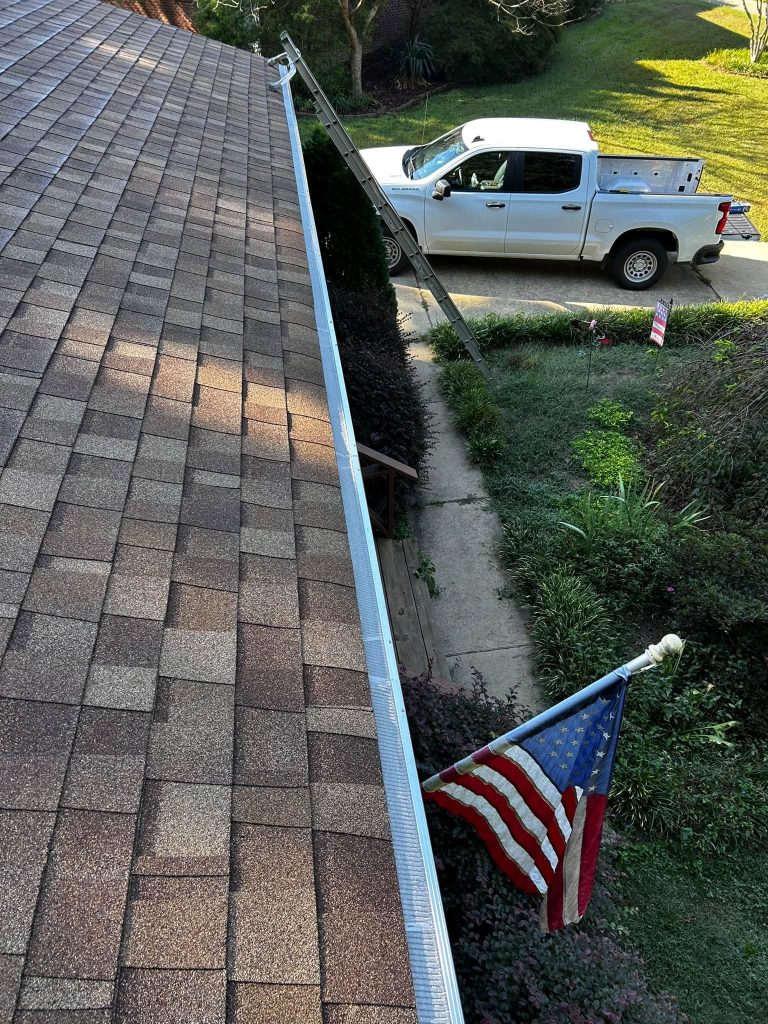
Open channels exist on your property for one specific reason: they catch fast-moving water coming off your shingles and safely push it away from your expensive foundation. When the metal is clean and properly angled, the setup handles heavy Wake County storms effortlessly without a second thought.
But the second piece of debris drops into the trough, and the physics of your home drainage immediately change. Just a few handfuls of wet pine needles or a solid mat of spring oak tassels turn a perfectly good drain into a stubborn dam. Once that organic dam forms, the water backs up instantly. Matthews Seamless Gutters sees this exact failure on properties every single week. Installing gutter guards in Raleigh, NC, is meant to solve this problem by filtering out debris while letting heavy liquid flow freely. However, not every product works on every house, and understanding the local tree canopy is critical to finding the right fit.
What Are the Key Takeaways for Protecting Your Roof in Raleigh, NC?
Every property requires a unique approach based entirely on the specific trees surrounding the house. Pine needles, oak leaves, and seed pods behave very differently when washed down a steep roofline, meaning the wrong physical filter will quickly choke the entire system.
- Debris Dictates Design: The exact type of leaves dropping on your shingles determines whether a fine mesh or a porous foam insert will actually prevent a stubborn clog.
- Volume Matters Heavily: A cover must easily handle sudden Carolina downpours without acting as a physical speed bump that causes liquid to violently overshoot the trough.
- Installation Is Everything: The most expensive filter on the market will fail immediately if the underlying metal is sagging, poorly pitched, or actively pulling away from the wood.
- Maintenance Reduction: Covers drastically cut down the time you spend balancing on a dangerous ladder, but occasional brushing is still a basic part of responsible homeownership.
- Foundation Integrity: Before any cover goes on, the existing metal channels must be completely cleaned, thoroughly evaluated, and permanently secured to the exterior walls.
How Do Debris and Rainwater Actually Interact on Your Roof in Raleigh, NC?
To understand why a drainage setup fails, you have to look directly at what happens the second the rain starts falling. Rain does not just drop vertically into the trough; it gains massive momentum as it races down the steep architectural shingles toward the edge.
Why Do Pine Needles And Oak Tassels Cause So Much Damage In Raleigh, NC?
Pine needles create a very specific physical problem. They are incredibly long, feather-light, and highly aerodynamic. As heavy rain washes them off the shingles, they naturally align themselves vertically as they hit the outer metal edge. If your covers feature large holes or cheap plastic grids, those thin needles slip right through, tip first. Once they wedge halfway through the holes, they act exactly like a rigid comb, catching and trapping every single piece of dirt that washes down behind them.
Oak trees present a completely different seasonal nightmare. Every spring, mature oaks drop thousands of stringy, dense tassels. These tassels are incredibly sticky with seasonal pollen and morning moisture, causing them to mat together exactly like heavy felt. If a protective cover lacks the right surface tension, those wet tassels will simply plaster themselves flat over the top. This completely seals the drain shut and forces fast-moving water to overshoot the system completely.
Why Does Our Local Climate Demand Different Solutions Than Coastal Areas?
Weather patterns vary wildly across the state, meaning what works perfectly on the coast might struggle heavily right here in the Triangle. Homeowners often research coastal flood solutions or read reviews for tropical storm defenses, incorrectly assuming that thicker is always better.
While coastal properties must be engineered specifically to handle immense volumes of blowing tropical rainfall, properties further inland face a drastically different reality. We deal with heavy, localized rainstorms mixed heavily with an overwhelming amount of dense tree debris. A massive flood defense cover designed strictly for pure water intake often features large, wide openings. If you put that exact same cover on a house sitting under a heavy canopy of Carolina pines, those large holes will let every single needle right into the hidden channel. You have to actively match the product to the exact environmental threat hitting your siding.
Which System Wins: Mesh Shields Vs Foam Inserts In Raleigh, NC?
Choosing the right filter depends entirely on the specific debris load hitting your property each season. We focus strictly on solutions that actually survive real-world field testing, leaning heavily on years of practical experience up on the ladders to see what works.
Evaluating the best gutter guards in Raleigh, NC, means looking closely at both distinct options based on your specific tree coverage.
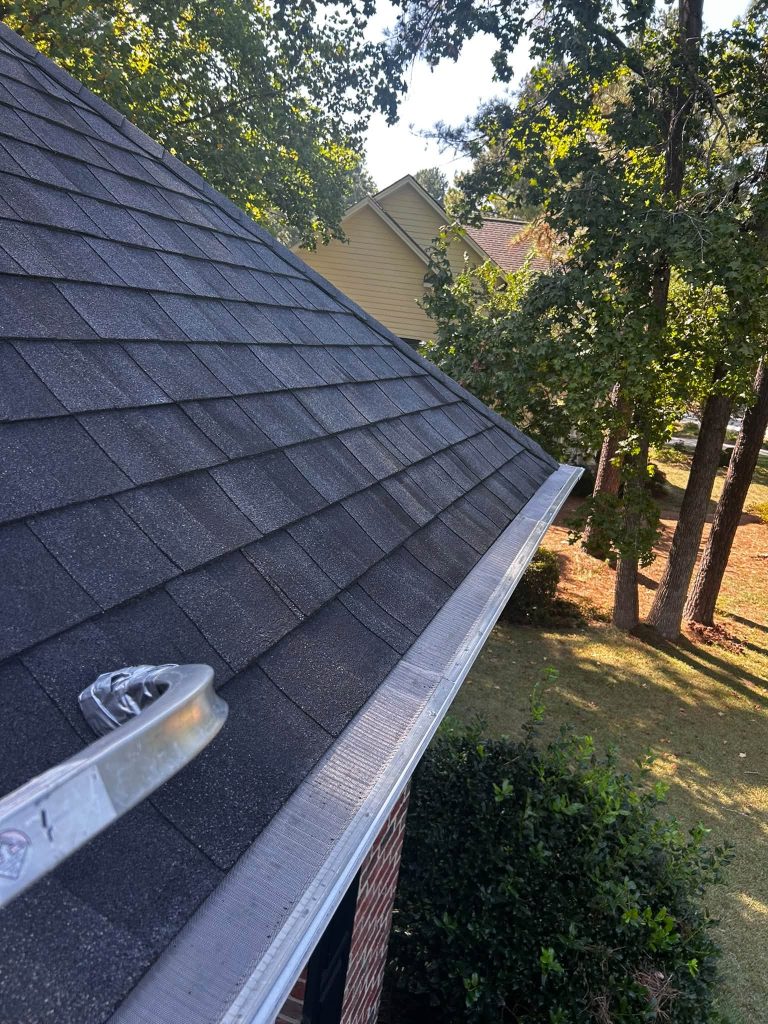
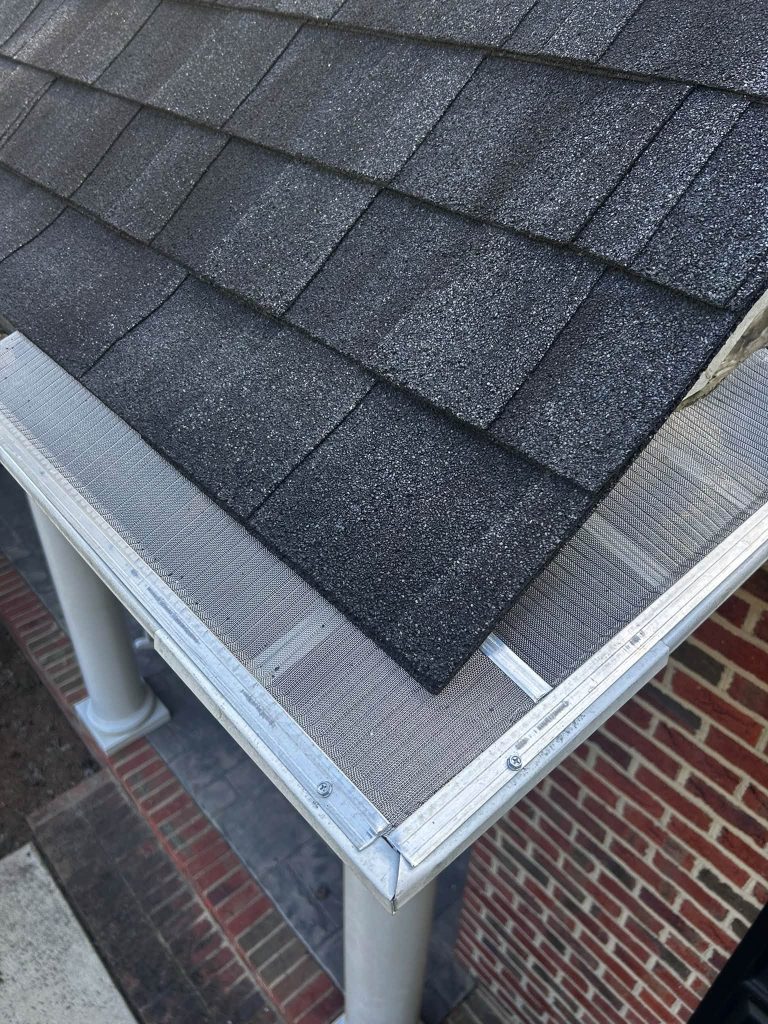
Mesh covers operate entirely on the physical principle of surface tension. They usually feature a rigid aluminum frame supporting a highly durable layer of fine metallic mesh. The screen itself is incredibly resilient and does a fantastic job of blocking even the most frustrating, microscopic local debris particles. However, the exact installation angle is absolutely critical to survival. If the pitch is way too steep, the fast-moving liquid runs off too quickly, never giving the surface tension a chance to pull the water down into the trough. If the angle sits too flat, heavy wet leaves might not blow off naturally in the winter wind.
What Are The Warning Signs Your Home Needs Immediate Exterior Help?
Do not wait for a complete structural collapse to start paying attention to your roofline. Before you research new gutter guards in Raleigh, NC, walk around your property during the next heavy rainstorm and look specifically for these physical signs of a failing exterior setup.
- Water Sheeting Behind the Metal: If you physically see heavy water running directly down the painted fascia board behind the aluminum, the internal seal is fully broken or the heavy screws have forcefully pulled loose.
- Muddy Tiger Striping: Vertical, dark, dirty streaks permanently stained on the outside front lip indicate constant, daily overflow. The trapped water is actively picking up abrasive roof grit and permanently staining the paint.
- Washed-Out Landscaping: Deep, ugly trenches carved entirely into the soil directly beneath your roofline prove that fast-moving liquid is consistently overshooting the setup and hammering your foundation dirt.
- Peeling Exterior Paint: Constant splashing and trapped moisture from a failing trough will quickly cause the expensive paint on your siding and exterior trim to violently blister and peel away from the wood.
- Visible Sagging Gaps: If the metal is visibly leaning forward toward the street, or you can actually see daylight shining between the back wall and the house, the steel hangers are completely dead.
Why Is A Completely Maintenance-Free Roof A Dangerous Myth?
There is absolutely no such thing as a totally maintenance-free exterior home product on the market. If a high-pressure salesman promises you will never have to look at your roof again after an install, they are simply not telling you the truth.
Realistic, honest maintenance simply means keeping an eye on the roofline after a massive storm. Once in a while, you might need to use a specialized brush attached securely to an extension pole to simply sweep dry, resting leaves off the very top surface. You are just clearing the top screen, not digging rotting, dense compost out of a deep metal channel. It turns a highly dangerous, miserable weekend chore into a quick, ten-minute sweep from the absolute safety of the ground.
What Does A Proper Field Evaluation Look Like For Your Property?
Choosing the exact right physical filter is a major decision based entirely on the unique geometry and surrounding environment of your specific house. We take a very practical, boots-on-the-ground approach to this entire diagnostic process.
Here is the reality most contractors skip over entirely. We constantly pull out failing, cheap plastic covers that homeowners installed themselves because they did not account for the exact pitch of the roof. If you just slap a rigid, flat cover over a sagging piece of metal, you are actively trapping the real structural failure entirely out of sight until the structural wood completely rots away.
Ready To Protect Your Foundation And Landscaping Completely?
A properly fitted physical barrier stops the brutal cycle of clogging, heavy overflow, and expensive property damage. It lets the entire setup do exactly what it was originally engineered to do. With three solid years in business and six total years of hands-on field experience, Matthews Seamless Gutters deeply understands exactly how to protect local properties from aggressive weather and relentless tree debris.
As a locally owned and operated crew, we take great pride in physically evaluating your specific house, recommending the exact right mesh or foam, and ensuring the final product is structurally sound from end to end. Stop fighting the dense pine needles and get off the dangerous ladder this weekend. Taking action now to install the most reliable gutter guards in Raleigh, NC, will permanently secure your property. Call (919) 817-9222 to speak directly with our team and schedule your strict structural evaluation today.
Can Proper Protective Covers Actually Handle Heavy Summer Rain?
Yes. High-quality systems are heavily engineered to handle maximum volumetric water flow safely. However, the physical installation must be completely flawless. If the metal is pitched improperly or the steep roof valleys lack dedicated splash shields, the fast-moving liquid can easily overshoot the outer edge during an extreme downpour.
Do Rigid Aluminum Covers Cause Massive Ice Dams In The Winter?
These products do not directly cause heavy ice dams on your roof. Dangerous ice dams are actually caused by poor insulation and a total lack of ventilation in your attic space, which melts the snow on the roof that then rapidly refreezes at the freezing cold eaves. A rigid, strong cover keeps the dense snow and heavy ice totally out of the internal channel, meaning when the thaw finally happens, the melting liquid has a clear, open path to drain away rather than hitting a frozen block of debris.
Can I Safely Install These Products Myself Over The Weekend?
While big box home improvement stores eagerly sell cheap, snap-in plastic pieces, DIY application is rarely ever recommended by anyone in the trade. Cheap plastic violently warps in the blistering sun, blows off in heavy winter wind, and often features massive openings that let thin pine needles right through into the drain. Furthermore, an amateur weekend project usually fails to completely correct the existing pitch and broken hanger issues before covering them up entirely.
Will I Still Need To Hire Someone To Clean My System?
You will absolutely no longer need to scoop heavy, rotting, foul-smelling sludge directly out of the inside of the tight channel. The vulnerable interior remains completely protected all year long. However, you may occasionally need to gently brush dry, resting debris off the flat top surface if a heavy accumulation of wet leaves fails to blow away naturally in the strong winter wind.
What Happens If The Crew Discovers Rotted Wood During The Inspection?
If the field installers discover that your existing fascia board is entirely soft or actively rotting away, they will never attach new heavy hardware to the dead timber. The compromised, failing wood must be physically cut out and entirely replaced with solid, structurally sound material before any new metal or protective covers can be safely secured to your exterior walls.